Tory

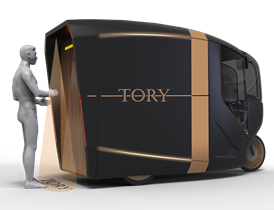
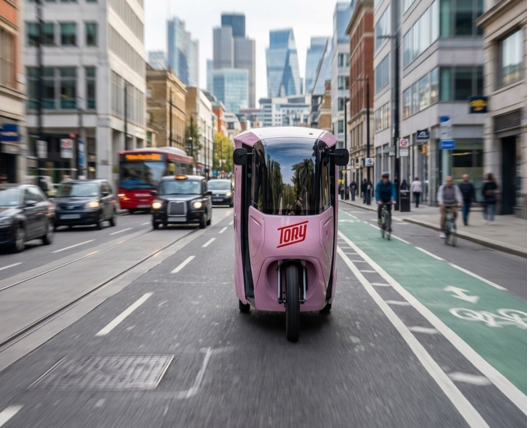
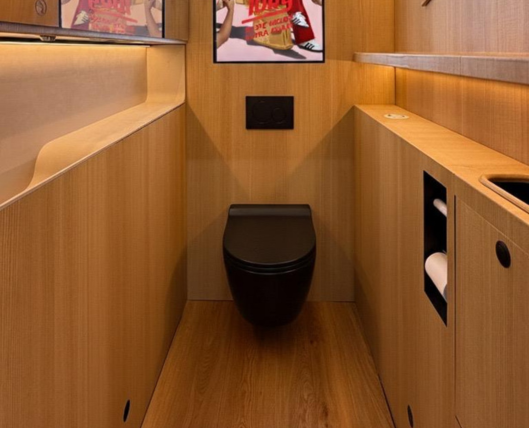
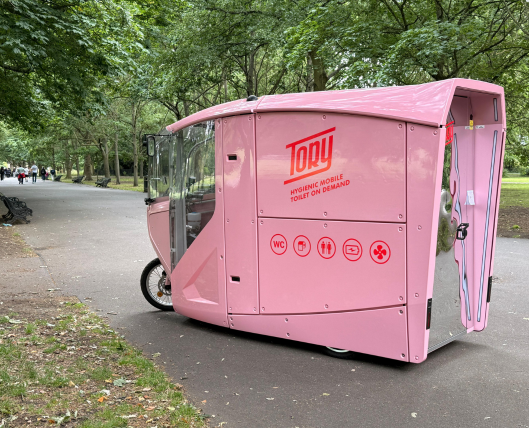
Tory is a mobile public toilet built onto the back of an electrically assisted cargo quad/trio-cycle — a compact, pedal-assisted vehicle sized for dense city centers. A single lockable booth carries a vacuum-based, electrically powered flush toilet and a hygiene station, usable seated or standing, with the service booked and paid through a dedicated mobile app. Zeron built the project with ARAN: ARAN led the industrial design and mechanical integration, and Zeron developed the hardware and the edge software that control and monitor the unit. The product runs on a Raspberry Pi at the edge, and was testd in London for the first time on July 2026.

Tory 2

Production:

4 units

Communication:

LTE, GPS, CANbus

Chip:

Raspberry Pi

Design & Engineering partner:

ARAN

Development languages:

Python & React
Wiring a rack of off-the-shelf parts into one working product is never as simple as it looks. A vacuum generator, pumps, water and waste tanks, two cameras, an LTE link, and a battery bus each speak their own protocol; getting them to act as a single machine is the real engineering. Zeron built a full test-bed of the electronics in the lab and ran several months of development against it, proving every function before touching the vehicle. That let the software and the mechanics advance in parallel, which cut the schedule and raised quality. When the mechanics were ready, integration onto the product itself took four days, and the unit went out to field testing in London. Zero faults in the field so far. That comes from careful component selection and robust code.
Zeron built the edge controller around a Raspberry Pi and wrote the software that runs it. The board carries 14 relay outputs and 14 digital inputs (11 of each in use, 3 spare), GPS and LTE over UART, two USB cameras recorded to local storage at 2 fps, I2C temperature sensing, a loudspeaker output, and a CANbus link to the vehicle battery. The software separates a drive mode (door locked, outriggers up) from a toilet mode (parking brake set, outriggers down), runs boot and mode self-tests (BIT), and exposes an offline technician screen — camera live view, relay and I/O status, battery and LTE state, errors, and upcoming maintenance — in Hebrew or English. Over-the-air updates and a server API follow in the next stage.